
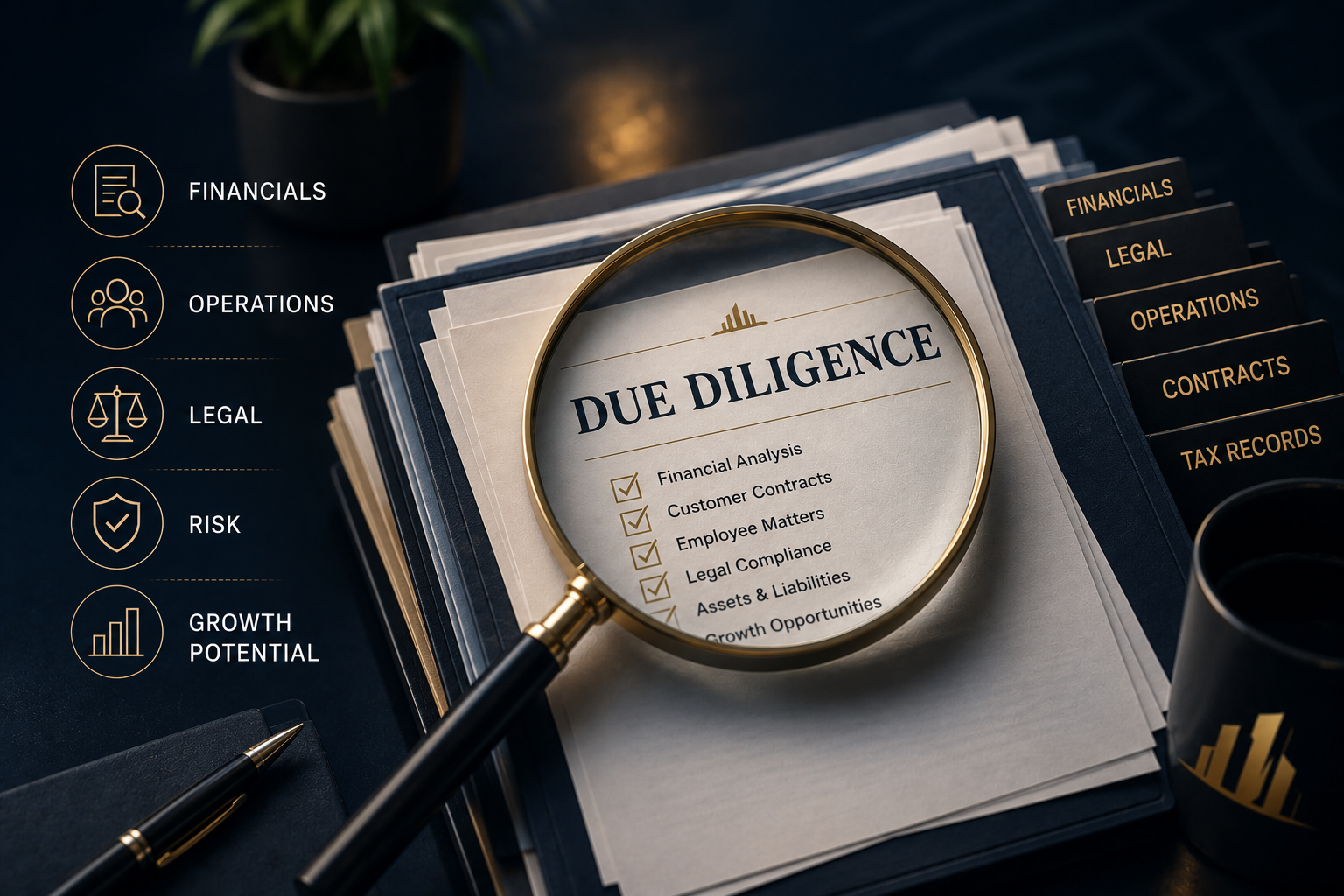
Due diligence is the stage of a business transaction where the buyer verifies that the business is everything the seller represented it to be. It is where deals are won, lost, renegotiated, or sometimes abandoned entirely. Whether you are buying or selling, understanding due diligence is essential to a successful transaction.
For buyers, thorough due diligence protects you from acquiring problems you did not know about. For sellers, understanding what buyers will investigate helps you prepare and avoid the surprises that derail deals. This guide covers both perspectives.
What Is Due Diligence?
Due diligence is the investigation a buyer conducts after a letter of intent is signed but before the deal closes. The buyer and their advisors examine the business’s financial, legal, operational, and commercial reality to confirm it matches what was presented during the sale process.
Due diligence typically takes 30 to 60 days and is one of the most intensive stages of any transaction. The buyer is looking for anything that would change the value of the business, create risk, or affect their decision to proceed. Anything they find can become grounds for renegotiation or, in serious cases, walking away.
Financial Due Diligence
Financial due diligence is the core of the process. The buyer verifies that the financial performance presented during the sale is accurate and sustainable.
This includes reviewing three or more years of tax returns and financial statements, verifying revenue and confirming it is recurring or repeatable, examining profit margins and trends, validating the seller’s discretionary earnings calculation and add-backs, reviewing accounts receivable and payable, and assessing customer concentration. Buyers want to confirm that the seller’s discretionary earnings presented are accurate and defensible, which is why proper documentation matters so much for sellers.
Legal Due Diligence
Legal due diligence examines the legal structure, obligations, and risks of the business. The buyer’s attorney reviews the corporate structure and ownership, all material contracts and their transferability, leases and real estate agreements, intellectual property ownership and protection, any pending or threatened litigation, regulatory compliance, and employment agreements.
For sellers, this is where unresolved legal issues become problems. A contract with an unfavorable change-of-control clause, unclear IP ownership, or pending litigation can derail a deal at this stage. Addressing these during preparation prevents them from becoming deal-killers later.
Operational Due Diligence
Operational due diligence assesses how the business actually runs and whether it can continue to run successfully under new ownership. The buyer examines the organizational structure and key employees, operational processes and systems, supplier and vendor relationships, equipment and asset condition, and the degree of owner dependency.
Owner dependency is a major focus here. If the buyer concludes that the business cannot operate without the current owner, it significantly affects the deal. This is why reducing owner dependency is such an important part of preparing a business for sale.
Commercial Due Diligence
Commercial due diligence examines the market position and competitive landscape of the business. The buyer assesses the customer base and satisfaction, the competitive environment, market trends and growth potential, the sustainability of the business model, and the strength of the brand and reputation.
This is where the buyer determines whether the business has a durable future or whether its current performance might decline. A business with strong customer loyalty, a defensible market position, and growth potential survives commercial due diligence well.
How Sellers Should Prepare for Due Diligence
Sellers who prepare for due diligence in advance move through it faster and with fewer complications. The key is to anticipate what buyers will investigate and have everything ready before it is requested.
Prepare a complete due diligence data room with all financial, legal, and operational documents organized and accessible. Resolve known issues before going to market. Document your processes, contracts, and relationships. Be honest and transparent, since trying to hide problems almost always backfires and can create legal liability. Avoiding due diligence surprises is one of the most important ways to prevent the mistakes when selling a business that cause deals to collapse.
Common Due Diligence Deal-Breakers
Certain issues commonly cause deals to fall apart or be renegotiated during due diligence. Financial discrepancies where the actual numbers do not match what was presented. Undisclosed liabilities or legal issues. Customer concentration that is higher than represented. Contracts that do not transfer to a new owner. Heavy owner dependency that makes the business difficult to operate post-sale.
Most of these are preventable through honest preparation. A seller who has cleaned up these issues before going to market sails through due diligence. According to the U.S. Small Business Administration, thorough due diligence is one of the most important steps in any business acquisition. Sell With Millsaps helps both buyers and sellers across 22 states navigate due diligence efficiently and avoid the surprises that derail deals.
Frequently Asked Questions
Q: What is due diligence when buying a business?
Due diligence is the investigation a buyer conducts after signing a letter of intent but before closing. The buyer and their advisors examine the financial, legal, operational, and commercial reality of the business to confirm it matches what the seller represented.
Q: How long does business due diligence take?
Due diligence typically takes 30 to 60 days. A well-prepared seller with organized documents moves through it faster, while an unprepared seller can stall the process for months. This is one of the stages where deals most commonly fall apart.
Q: What do buyers check during due diligence?
Buyers conduct financial due diligence verifying the numbers, legal due diligence examining contracts and liabilities, operational due diligence assessing how the business runs, and commercial due diligence evaluating market position and competition.
Q: What causes deals to fall apart during due diligence?
Common deal-breakers include financial discrepancies, undisclosed liabilities or legal issues, customer concentration higher than represented, contracts that do not transfer to a new owner, and heavy owner dependency. Most are preventable through honest preparation.
Q: How can sellers prepare for due diligence?
Sellers should prepare a complete due diligence data room with all documents organized, resolve known issues before going to market, document processes and relationships, and be transparent throughout. Anticipating what buyers will investigate prevents costly surprises.