
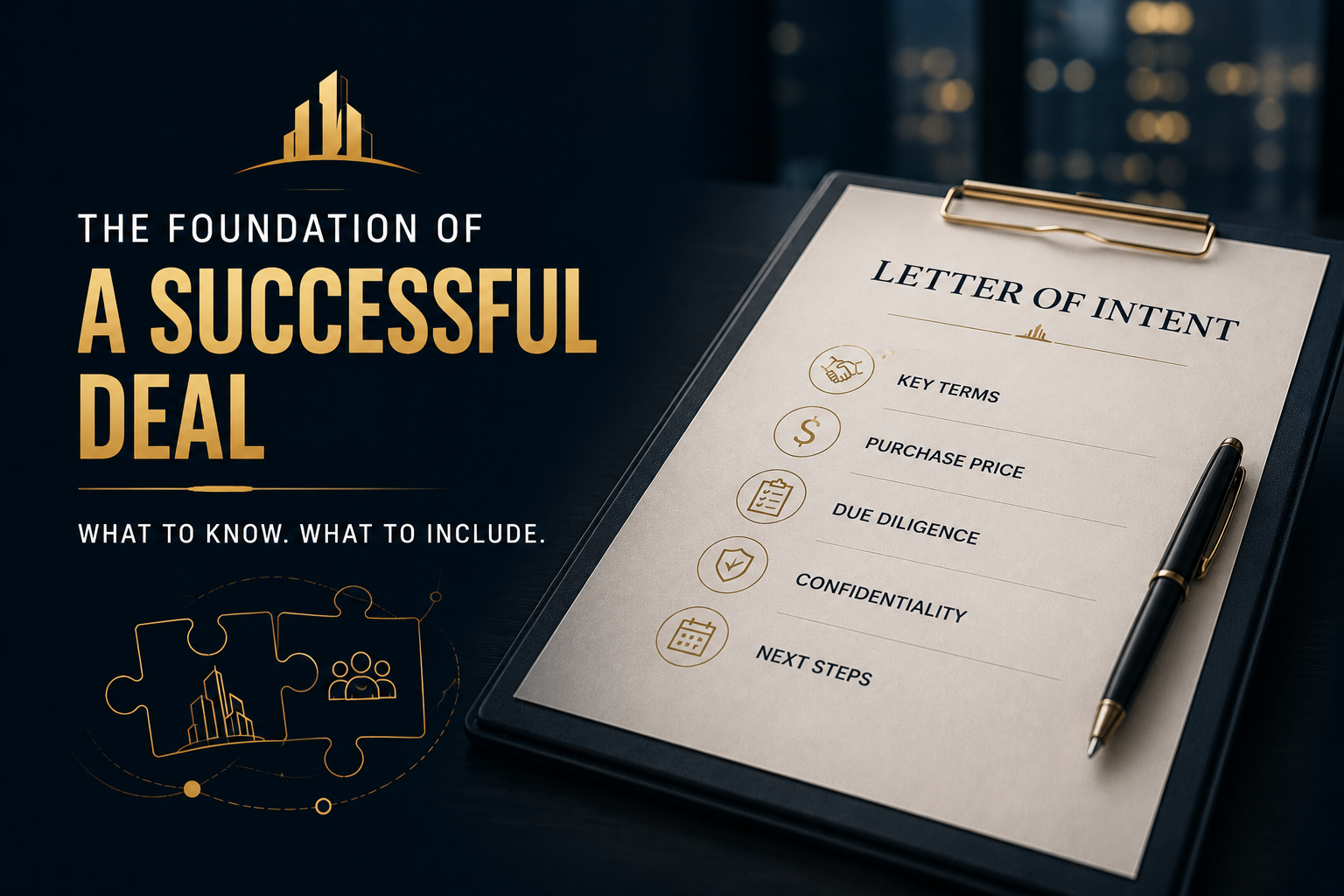
The letter of intent, usually called an LOI, is one of the most important documents in a business sale. It is the point where a serious buyer signals their intent to purchase and the two sides agree on the key terms of the deal before moving into the formal process.
Getting the LOI right matters enormously, because it sets the framework for everything that follows. A poorly negotiated LOI can lock you into unfavorable terms or leave critical issues unaddressed. This guide explains what an LOI is, what it should include, and how to approach it.
What Is a Letter of Intent?
A letter of intent is a document, usually submitted by the buyer, that outlines the proposed terms of a business purchase. It signals that the buyer is serious and establishes the framework for the deal before the parties invest in detailed due diligence and legal work.
The LOI comes after initial conversations and buyer qualification but before due diligence and the final purchase agreement. It is the bridge between informal interest and a binding deal. Once both parties sign the LOI, the deal moves into due diligence and final documentation.
Is a Letter of Intent Binding?
This is one of the most important and misunderstood aspects of an LOI. Most of a letter of intent is non-binding, meaning the parties are not legally obligated to complete the deal on those exact terms. The LOI expresses intent and establishes a framework, but the binding agreement comes later in the purchase agreement.
However, certain provisions of an LOI are typically binding even though the overall document is not. These usually include confidentiality obligations, exclusivity or no-shop provisions that prevent the seller from negotiating with other buyers for a period, and sometimes provisions about who pays certain expenses. Understanding which parts are binding is critical, which is why having an attorney review the LOI is important.
What a Letter of Intent Should Include
A well-drafted letter of intent covers the essential terms of the deal. The purchase price and how it was determined. The deal structure, whether it is an asset sale or stock sale. The payment terms, including how much is paid at closing and whether there is seller financing or an earnout.
It should also include the assets and liabilities included in the sale, the proposed timeline to closing, the due diligence period and what it covers, any conditions or contingencies, the transition support expected from the seller, and the exclusivity period. The structure choice between asset and stock sale is significant, and understanding asset sale vs stock sale helps you evaluate this part of the LOI.
Price Is Not the Only Thing That Matters
Sellers often focus exclusively on the purchase price in an LOI, but the structure and terms matter just as much for what you actually walk away with.
An LOI with a high headline price but a large earnout tied to future performance carries more risk than a slightly lower all-cash offer. Seller financing terms, the size of any holdback or escrow, the allocation of the purchase price for tax purposes, and the transition obligations all affect your true outcome. Evaluating an LOI requires looking at the complete picture, not just the top-line number.
Understanding Exclusivity
Most letters of intent include an exclusivity or no-shop provision. This means that once you sign the LOI, you agree not to negotiate with or solicit other buyers for a defined period, often 30 to 90 days, while the buyer conducts due diligence.
Exclusivity is reasonable from the buyer’s perspective, since they are about to spend time and money on due diligence and do not want you shopping their offer to others. But from the seller’s perspective, exclusivity removes your leverage during the period it is in effect. This is why it is best to negotiate the LOI when you have multiple interested buyers, before granting exclusivity to one of them.
How to Negotiate the LOI
Because the LOI sets the framework for the entire deal, it is worth negotiating carefully rather than rushing to sign. The strongest negotiating position comes from having multiple interested buyers, which is one reason a broker who creates buyer competition is valuable.
Key points to negotiate include the price and how it is structured, the size and terms of any earnout or seller financing, the length of the exclusivity period, the scope and timeline of due diligence, and the transition obligations. Once you grant exclusivity, your leverage drops significantly, so the LOI stage is when leverage matters most. Learning how to sell your business with a broker shows how professional representation strengthens your position at this stage.
Why Professional Guidance Matters at the LOI Stage
The letter of intent is where many sellers make costly mistakes, either by accepting unfavorable terms they do not fully understand or by granting exclusivity without negotiating the key points first.
An experienced broker and a transaction attorney help you understand what each provision means, what is standard, and what is worth pushing back on. They also help you evaluate the complete picture rather than fixating on the headline price. Sell With Millsaps guides business owners across 22 states through the LOI stage and the entire transaction, ensuring the terms protect your interests and maximize your net outcome. Always have a qualified attorney review any letter of intent before signing.
Frequently Asked Questions
Q: What is a letter of intent in a business sale?
A letter of intent, or LOI, is a document usually submitted by the buyer that outlines the proposed terms of a business purchase. It signals serious intent and establishes the framework for the deal before the parties move into due diligence and final documentation.
Q: Is a letter of intent legally binding?
Most of a letter of intent is non-binding, but certain provisions are typically binding even when the overall document is not. These usually include confidentiality obligations, exclusivity or no-shop provisions, and sometimes expense provisions. Having an attorney review the LOI is important.
Q: What should a letter of intent include?
A well-drafted LOI includes the purchase price, deal structure, payment terms, assets and liabilities included, proposed closing timeline, due diligence period, contingencies, transition support, and the exclusivity period.
Q: What is an exclusivity period in a letter of intent?
An exclusivity or no-shop provision means that once you sign the LOI, you agree not to negotiate with other buyers for a defined period, often 30 to 90 days, while the buyer conducts due diligence. It removes seller leverage, so negotiate key terms before granting it.
Q: Should I negotiate the letter of intent?
Yes. The LOI sets the framework for the entire deal, so it is worth negotiating carefully. Key points include price and structure, earnout or seller financing terms, exclusivity length, and transition obligations. Your leverage drops significantly after granting exclusivity.